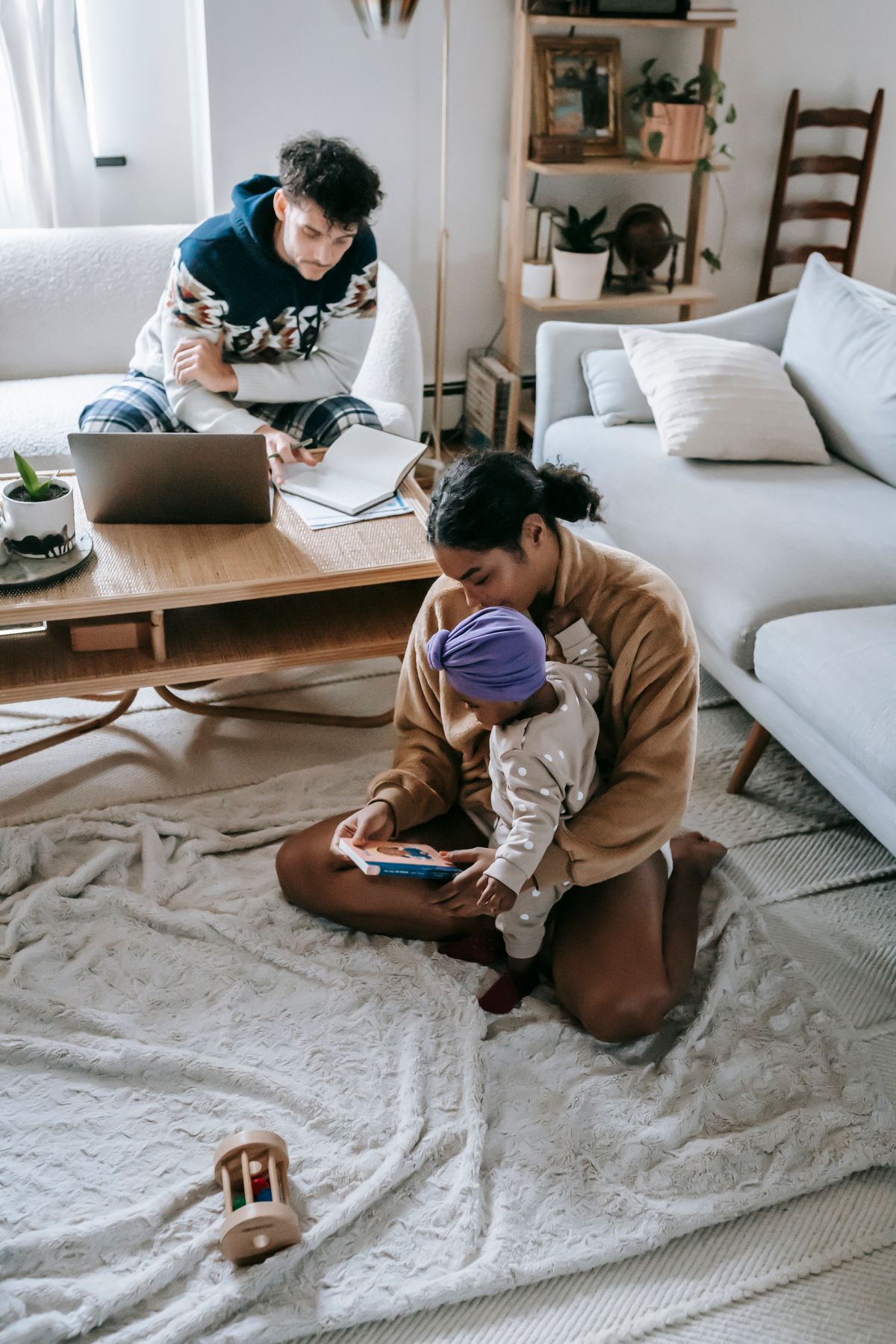
I know what you’re going to say. The AAP recommends room-sharing for six to twelve months. I know. I’ve read it. I’ve also lived in a room with a newborn who grunts, snorts, squeaks, and thrashes every forty-five minutes, which means I haven’t slept more than one consecutive hour in two months, which means I’m a worse parent during the day than I would be if I just moved her fifteen feet down the hall.
So I moved her. At eight weeks. And you know what happened? Everyone slept.
The Problem With Room-Sharing
Babies are loud sleepers. Unbelievably loud. The grunting, the squirming, the random single cry that means absolutely nothing. When your baby is three feet from your head, you hear ALL of it. And you respond to ALL of it. Even when they’re asleep. Even when they don’t need you.
Every sound triggers the “is something wrong?” alarm in your brain. You can’t get into deep sleep because your body is permanently on alert. You’re waking up for sounds that your baby is making IN their sleep, not because they’re awake or need you.
A friend told me she was waking up twelve times a night. Not because her baby was crying. Because she could hear him breathing. Breathing. And every change in pattern made her bolt upright.
Why It Makes Sleep Training Harder
When you’re trying to give your baby space to self-soothe (the skill of settling themselves back to sleep without intervention), and they’re right next to your bed, every whimper feels amplified. The self-soothing timer (a set window of time you wait before going in) is ten times harder to respect when the sound is three feet from your pillow.
You also become the variable your baby can sense. They smell you. They hear your breathing. They know you’re there. So when they surface between sleep cycles, instead of settling back down, they’re like “oh good, you’re right here, PICK ME UP.”
Once they’re in their own room? They surface, they notice nothing interesting is happening, and they go back to sleep. The separation removes the temptation for both of you.
The Safety Conversation
I’m not a pediatrician. I’m not telling you to ignore medical advice. What I AM saying is that the AAP recommendation is based on SIDS reduction data, and the risk factors for SIDS include things like unsafe sleep surfaces, smoking, overheating, and prone sleeping. If you have a baby in a safe crib, on their back, in a properly set-up room with a monitor, the room-sharing piece is one factor among many.
Talk to your pediatrician. Make your own informed decision. But don’t let guilt keep you in a situation where nobody is sleeping and you’re so exhausted you’re becoming a safety hazard yourself (falling asleep while holding the baby, dozing off during feeds, driving on no sleep).
How to Set Up Their Room
When you do make the move:
- Video monitor with sound (you will still hear them if they actually need you)
- White noise machine in their room, loud enough to mask household sounds
- Blackout curtains or shades
- Temperature between 68-72 degrees
- Nothing in the crib except the baby and a fitted sheet
- Do it cold turkey, not gradually. One night. Commit.
Most babies adjust to their own room within one to two nights. Some sleep better the very first night because they’re not being woken by YOUR noises anymore. It goes both ways.
Mom Awakened covers when and how to transition to the baby’s own room, what the setup should look like, and how it integrates with the overall sleep training method. Coming soon.
Clara Harper moved both babies to their own rooms before the “recommended” timeline because she values honesty over optics. Her babies thrived. She slept. Everyone’s fine. Author of Mom Interrupted. Making controversial sleep decisions on TikTok.
For the toddler who’s nervous about sleeping alone in their own space, Anxiety Is My Monster helps them understand that bravery doesn’t mean the fear goes away.





Leave a Reply